A strategic approach to refugee care and management in Nigeria by Hope For All Foundation.
Disaster is an inevitable part of our lives as human beings. We do not pray for it, but we all have the responsibility of being prepared in case of its arrival. Proper Preparation helps us avoid being caught unaware and reduces casualties to the barest minimum.
There are natural disasters and manmade disasters, these distinctions do not matter as much as what they both have in common. They both have the tendency to leave their victims immensely harmed or deceased and their survivors distraught, hurting, lost, confused, deprived and often times displaced.
Some disasters leave deep scars, they shake the very foundation of peoples livelihoods and force them to flee from the place they call home.
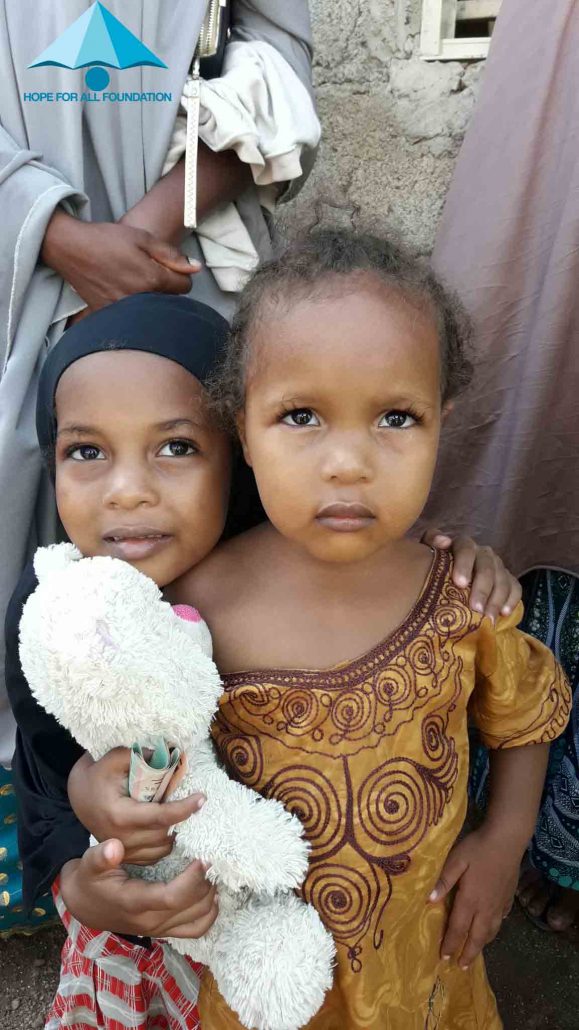
As of now IDPs are residing in the outskirts of various states on peoples land away from civilization. The work of rehabilitation is a challenging one, hope for all foundation (HFAF) in collaboration with generous sponsors, partners, contributors and volunteers, individuals and organisations alike, provides this very much needed service to IDPs in 45 such camps and settlements ( 20,000 people), some are Bwari, Durumi, Wassa, Dakwa, Karmajiji, Kurudu, Kuchiko, Red Bricks, Maraba Sharp Corner, Guruku, Waru, Orozo, Fuka Kwali etc. We have come to understand that survivors of insurgence need emergency care, Love and attention, due to the psychological trauma they have been though. These gory experiences are capable of triggering anti-social behaviour.
Hope for all foundation has been dedicated to the rehabilitation of IDPs since 2014 When the Boko Haram insurgence drove thousands of people from Borno, Adamawa and Yobe state to FCT Abuja. We have seen first-hand what disaster can do to people physically, psychologically and emotionally. More than tearing people away from their loved ones, life investments, education and dreams, disasters like the Boko Haram insurgence, Floods and attacks by Fulani herdsmen, are capable of making people unstable in relations with the new environments they may find themselves in. Our intervention program is centred around the following approaches:
1. Psychosocial Therapy: A case study of IDPs in Durunmi camp by HFAF proved that IDPs are usually Withdrawn, Aggressive and more often than not, Suicidal. They are in dire need of psychosocial therapy. Psychosocial therapy involves the recognition of the relationship between the mental, emotional wellbeing and the violent environment the IDPs have come out from and the effect that these factors have on their ability to function productively in the society. This therapy teaches them to trust people again, have hope and a reason to live despite all they have gone through. With proper counselling, Welfare, recreational activities and productive engagement in skill acquisition training programs, the IDPs are able to move on from the pain and contribute positively to their immediate community.
2.Health Care: This is a very important aspect of IDP rehabilitation process, each camp has over a hundred families living together. It is important to help and support them as they adjust to these new living conditions. Congestion puts the spread of disease at high risk level, with proper health care in place, we are able to reduce sickness and mortality rate by improving proper hygiene practices. Sensitization on simple practices like the importance of regular body washes, teeth care, refuse management and laundry cannot be overlooked. In this process, IDPs require adequate access to medicines and basic social services like clean water, waste disposal and toilet facilities for the families and primary health care for expecting and nursing mothers. The ultimate goal can be achieved by making it easy for them to have access to health care centres to encourage regular medical check ups. This does not just keep them safe but it also protects the health and livelihood of the host community.
3. Education: Education is a vital part of the program that does not exclude adult education. This is to ensure that there is continuity of their educatucation on various levels. Thankfully we have children who have completed their primary school education and moved on to secondary school from the IDP camps.
In conclusion, there is only so much that non profit organisations like hope for all foundation can do to effectively meet the scope of this problem The IDPs do not need our pity however, rather they need our support, love, action and voice.
It is encouraging to see that indeed with effort and support, together we can achieve so much more.
The things we do for ourselves die with us, but the love we give to others creates a ripple effect and lives on forever.
A PAPER WRITTEN BY HOPE FOR ALL FOUNDATION IN COMMEMURATION OF THE 2017 WORLD REFUGEES DAY.